What Network Configuration Really Means
Network configuration is the process of setting up how devices talk to each other within a network. That includes assigning IP addresses, managing routing tables, configuring firewall rules, and setting policies that keep data flowing where it needs to go. It’s the foundation without it, nothing connects, nothing protects, and nothing scales.
Why does it matter? Simple: performance, security, and uptime. Get your configuration wrong, and traffic slows down, threats sneak in, or entire systems go offline. Get it right, and your network runs quietly in the background, doing what it should without drama.
Traditionally, teams did this manually. That means command line tools, config files, and constant tweaking. But at scale, that’s a mess error prone, slow, and hard to manage. Now, automation and smart systems are taking over parts of the job, handling repetitive tasks and letting you focus on what really needs a human brain. The shift isn’t just about saving time it’s about avoiding costly mistakes and staying responsive in a world that doesn’t slow down.
Enter Deep Learning: The Smart Brain Behind the Switches
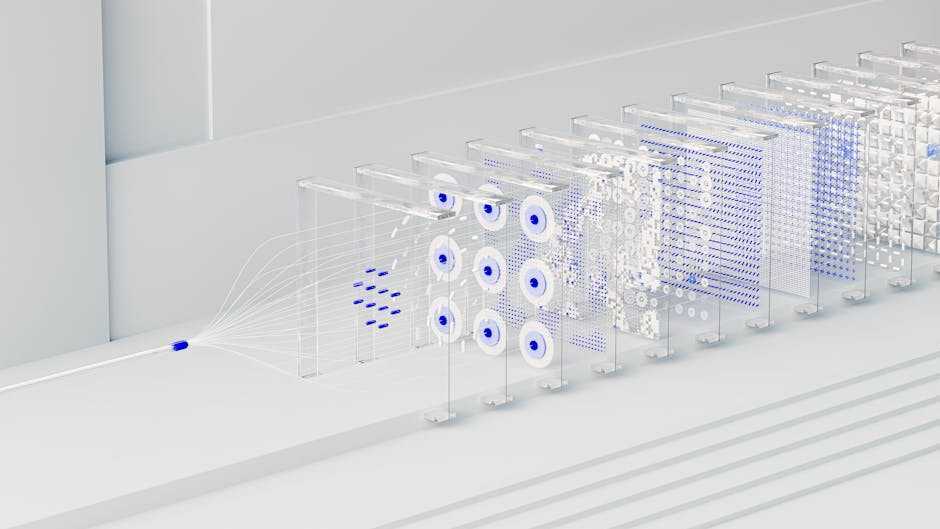
Deep learning is a kind of machine learning that mimics how the human brain works just with way more math and zero need for sleep. It uses something called neural networks that learn by example. Feed it loads of data like past network traffic, configurations, bottlenecks and it starts to notice patterns. Kind of like how a seasoned IT pro can smell trouble in a messy config file, but scaled up to do that across thousands of devices at once.
Here’s the kicker: deep learning doesn’t just analyze patterns it predicts what’ll happen next. It sees the warning signs of a network slowdown before it hits. It can recommend (or just enact) smarter configurations based on what it’s learned in similar past situations. Instead of guessing or relying on static rules, this tech adapts.
That adaptability makes it a game changer. Networks are big, chaotic, and getting more complex every month. Deep learning can stay ahead of the mess tweaking, balancing, and reconfiguring faster than human hands ever could. For anyone managing the spaghetti mess of modern infrastructure, that’s not just helpful. It’s essential.
Real Benefits of Using Deep Learning for Configuration
Deep learning doesn’t sleep, and that’s exactly what makes it a force multiplier in network management.
First, it spots problems before you do. Network bottlenecks that used to take hours or days to detect? Gone. These smart systems crunch traffic data in real time, flagging slow spots and failures as they emerge not after the damage is done.
Next, configuration doesn’t rely on best guesses anymore. Deep learning models analyze historical and real time conditions to suggest optimal settings bandwidth, routing paths, firewall rules with a level of precision humans can’t match in real time environments. No more fumbling with trial and error setups.
And once the model is confident? It adjusts without waiting for a human green light. That’s right auto tuning settings as it goes, responding to usage spikes or outages instantly. Think of it like having an in house network engineer on call 24/7, only faster.
The kicker? It scales. Whether you’re managing a company LAN or a global cloud backbone, deep learning can apply policy and performance tweaks instantly, without introducing chaos. Automation is no longer risky; with the right guardrails, it’s safer than manual configs.
The future of network configuration isn’t just smart it’s constantly adapting, learning, and improving. All in real time. No scripts, no stress.
How Optimization Actually Looks in Action

Deep learning is already doing more than just crunching data it’s slashing downtime and squeezing more performance out of networks where every second counts. Let’s break it down.
In cloud networks, deep learning models are constantly watching traffic flows, flagging anomalies, and making live adjustments. Picture a load balancer shifting resources automatically before congestion happens. That’s not magic it’s predictive modeling based on hundreds of variables.
In enterprise IT, companies are using deep learning to forecast configuration drift. Instead of waiting for tech teams to discover network slowdowns or mismatched settings, smart systems make preemptive tweaks. The result? Fewer outages, faster issue resolution, and smaller ops teams doing more with less churn.
And in smart cities? Traffic systems, public Wi Fi, and emergency services all lean on networks that have to react fast and scale without breaking. Deep learning fine tunes signal paths, firewall rules, and routing policies on the fly. It’s helping cities move from reactive to proactive.
Each of these use cases highlights the same thing: data driven config tweaks, done faster and smarter than humans can manage alone. For more proof and examples, check out deep learning optimization in practice.
Potential Pitfalls to Watch
Deep learning isn’t magic. Feed it bad data, and it delivers bad decisions. Training models on noisy logs, outdated configs, or biased inputs just sets the network up for failure. High quality input data is non negotiable clean, relevant, and broad enough to reflect your real infrastructure.
Then there’s the black box problem. These models can spit out config changes or routing suggestions, but good luck figuring out why. That lack of explainability makes trust an issue, especially in critical systems where every decision can have real world fallout.
And no, we’re not at full autopilot yet. Human oversight is still essential. You need people checking the outputs, understanding when the AI is off, and making judgment calls the model can’t. Deep learning is a powerful tool, not a replacement. At least not today.
Time to Get Tactical
If you’re ready to bring deep learning into your network configuration workflow, start with a solid toolset. Platforms like TensorFlow, PyTorch, and Hugging Face offer pre built models and libraries for rapid experimentation. For network specific insights, tools like Cisco’s AI driven DNA Center and Juniper’s Mist AI integrate deep learning into practical network automation. You don’t need to build everything from scratch most teams start with what’s out there and customize.
But here’s the thing: deep learning isn’t always the right hammer. It’s best used when your network generates large amounts of data and you need pattern recognition at scale think automated troubleshooting, anomaly detection, or predictive routing. If your system is smaller or if rules are clear and straightforward, traditional automation might be faster, cheaper, and easier to manage.
Rule of thumb? Use deep learning where the stakes are high and human response times are too slow.
For a deeper dive into advanced setups, see Explore deeper approaches to deep learning optimization.
Future Proofing Your Network Team
Deep learning won’t wait for your team to catch up. If you’re relying on traditional IT workflows, you’re already behind. The first move? Upskill your people. That means hands on familiarity with AI driven systems how they ingest data, iterate, and trigger action. Not everyone needs to code a model, but every team member should understand how decisions are being made.
Next, rethink how your network is built. Static architecture can’t support dynamic learning. You’ll need systems that can adapt automated configuration pipelines, real time logging, and middleware that can keep up with machine managed changes. This isn’t optional when the network itself becomes a learning entity.
Finally, stay nimble. Deep learning frameworks evolve quickly today’s cutting edge becomes standard in six months. Strong documentation, containerized deployments, and modular infrastructure help you pivot when the model or the rules change.
Less guesswork. More performance. That’s the win.