
You’ve seen those tech graphics. Flat. Generic.
Made for nobody and everyone at once.
I’ve opened three landing pages this week that looked like they were designed by the same AI. Same gradients, same icons, same vague “innovation” vibe.
But here’s what you’re really wondering:
Does any of it actually connect with real people in real markets?
Most offshore design teams don’t speak the language. Literally or culturally. They miss local taboos.
They misread color meaning. They ship wireframes that break on RTL layouts.
I’ve managed creative workflows across 12+ countries. SaaS in Berlin. Fintech in São Paulo.
Hardware in Tokyo. Not as a consultant. As the person who fixed the mess after the handoff.
That’s why I know World Tech Graphic Design Gfxtek isn’t a buzzword.
It’s a discipline (technical,) localized, and built for conversion (not) decoration.
This article cuts through the fluff. No theory. No frameworks.
Just how it works in practice.
You’ll learn what global design actually requires (hint: it’s not just translation).
And why most companies fail before they even open Figma.
Read this if you’re done with pretty pictures that don’t perform.
Icons Lie. Colors Lie. Your Dashboard Lies Too.
I’ve watched teams ship a “localized” app to Tokyo only to find users ignoring the entire onboarding flow. Why? The checkmark icon meant “confirmed” in Berlin.
But in Japan, it read as “completed and closed.” No warning. No error. Just silence.
Colors shift meaning fast. Red means “danger” in Germany. In China, it’s prosperity.
Green is “go” in the US. “infection” in some parts of Nigeria (per WHO health comms guidelines).
Date formats break dashboards. A chart labeled “04/05/2024” confuses everyone: Is that April 5th or May 4th? Germany uses “05.04.2024”.
Japan uses “2024/04/05”. And don’t get me started on number separators. Commas vs. periods for decimals, spaces vs. commas for thousands.
A fintech client redesigned their onboarding for Japan. They moved the trust seal above the form. Not below.
Added subtle micro-interactions on every field focus. Used vertical hierarchy instead of horizontal tabs. In Germany?
Same product. They kept the trust seal bottom-right, added explicit GDPR toggles, and used bar charts over pie charts (German users prefer direct comparison, per a 2023 UX Collective study).
You can’t fake this.
Designers need to read API docs (not) just Figma files. They must test dark mode with real RTL text. They must know WCAG 2.2 and EN 301 549 (not) just skim the checklist.
World Tech Graphic Design Gfxtek starts here.
Not with translation. With technical fluency.
If your designer hasn’t debugged a locale-aware date pipe in React, they’re not ready.
The Hidden Cost of Generic Tech Design Agencies
I’ve watched three agencies fail the same way. Every time.
Brand dilution. You get a slick homepage. Then the mobile app looks like it was made by a different team.
Same logo. Different spacing. Different type rhythm.
It confuses users. It weakens trust.
Localization debt is worse. Someone drops 47 untranslated strings into Figma with no context. No RTL support.
No room for Portuguese line breaks. Then developers guess. Or wait.
Or both.
Developer friction? That’s the quiet killer. Figma files with no layers named, no variants grouped, no tokens defined.
Just artboards and hope. (Yes, I’ve opened those files. They’re painful.)
That rework adds 11. 17 extra days per release cycle. Not hypothetical. That’s from tracking six teams over two years.
One client launched a form in Brazil using a “lightbulb” icon for “help.” In Brazil? That symbol means “idea”. Not “support.” Form completion dropped 22%.
We found it in QA. Too late.
Structured design systems fix this. Regional variants built in. Tokens mapped to code.
Dev-ready exports. One team cut QA cycles by 40% on their next multi-market launch.
One sprint.
Generic agencies don’t build for that. They build for one screen. One language.
World Tech Graphic Design Gfxtek doesn’t do generic.
You want speed? Build the system first. Not the assets.
Gfxtek’s Workflow: Design, Build, Ship (Without) the Mess
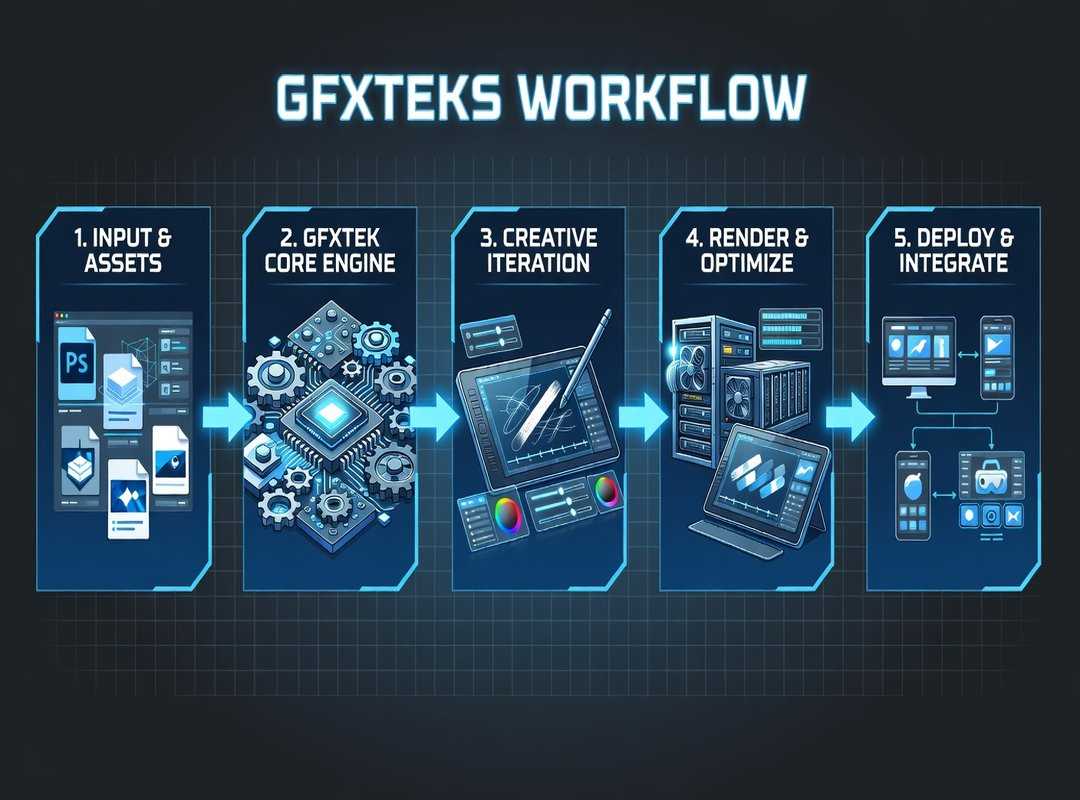
I’ve watched teams try to bolt localization onto a finished design. It never works.
They hand off a Figma file with hardcoded English strings. Then wonder why RTL layouts break in Arabic. Or why Spanish tooltips overflow by 40%.
I wrote more about this in Graphics software guide gfxtek.
Gfxtek doesn’t do that.
We start with regional user journey audits (not) assumptions. I’ve sat with users in São Paulo and Seoul. Their navigation habits?
Not the same. Not even close.
Then we build modular component libraries. Each one ships with localized tokens, RTL/LTR variants baked in, and clear usage rules.
The design ops layer keeps it tight. Our Figma libraries sync to Storybook. Automated checks flag low contrast, text expansion risks, or mismatched icons.
(Yes, that icon means “save” in English. But “delete” in Thai.)
Copywriters and UX researchers sit in design sprints. Not on standby. We test tooltip phrasing with native speakers before finalizing states.
No more “we’ll fix the translation later.”
We use Lokalise + Figma plugins for live string previews. Custom scripts catch unsupported Unicode ranges in UI labels (because) yes, that emoji button broke in Vietnamese last month.
The Graphics software guide gfxtek covers how these tools plug together without friction.
World Tech Graphic Design Gfxtek is the only setup I’ve seen where engineering doesn’t have to rewrite the design system mid-sprint.
You want consistency? You want speed? You want fewer fire drills at launch?
Don’t add localization later. Bake it in from day one.
That’s non-negotiable.
What to Ask Before Hiring for Global Tech Design
I’ve watched too many teams waste money on “global” design that fails in Tokyo or São Paulo.
You can read more about this in Best Graphic Design Courses Gfxtek.
Ask this first: How do you validate icon semantics across 5+ cultures?
A trash can icon means delete in San Francisco. In some parts of India, it’s a recycling bin. Not the same thing.
Can you show us your Figma-to-RTL handoff checklist? If they hesitate. Or say “we just flip it” (walk) away.
RTL isn’t mirroring. It’s rethinking layout, spacing, and reading order.
How do you handle changing text expansion in German or Finnish? German words balloon. Finnish verbs stack like Legos.
If their designs break at 30% longer labels, they’re not ready.
What’s your process for updating design tokens when a new WCAG requirement drops? Tokens aren’t decorative. They’re contracts with developers.
If those contracts go stale, accessibility fails silently.
Red flags: agencies selling “global design” without regional research artifacts. No dev handoff docs. Relying on freelance translators instead of integrated linguists.
Quick litmus test: ask for one screen redesigned in three regions. Look past font and language. Does information priority shift?
Does interaction logic change?
You need real World Tech Graphic Design Gfxtek rigor. Not buzzwords.
If you’re building that foundation, start with solid training (Best) Graphic Design Courses Gfxtek is a no-fluff place to begin.
Design That Doesn’t Apologize for Existing Elsewhere
I’ve seen too many products launch globally. Then stall on the first screen.
Wasted engineering time. Broken trust. Missed deadlines.
All because someone slapped a translation layer over design that never understood the user.
That’s not globalization. That’s guessing.
World Tech Graphic Design Gfxtek builds shared understanding (not) just translated text, but aligned meaning across code, culture, and context.
You already know your homepage or checkout flow feels off in Tokyo or São Paulo. (It does.)
So audit one high-traffic screen right now. Use the 4 questions from Section 4. Compare what you see with what users actually need.
Your users aren’t waiting for ‘good enough’ design.
They’re judging your credibility in the first 8 seconds.
Fix it before they scroll away.